
 Volver al blog
Valencia prepares for a historic year at the Hortensia Herrero Art Centre: the final months of the current exhibition and an unmissable encounter with Anselm Kiefer in 2026.
The Hortensia Herrero Art Centre (CAHH) is entering a decisive stage in its programme with two milestones that consolidate its position as one of Spain’s great cultural landmarks. On the one hand, the centre is in the final months of its current exhibition, a proposal that has defined the CAHH’s identity since its opening and has attracted more than 400,000 national and international visitors. The reason for this change is to prepare one of next year’s great artistic events: the opening, on 28 April 2026, of Anselm Kiefer’s first exhibition in the city of Valencia.
With this double perspective —the close of one stage and the beginning of another with international reach— the CAHH invites audiences, critics and specialist media to put Valencia on the essential map of contemporary art.
Last chance to see the CAHH’s current exhibition
More than two years after the opening of the Hortensia Herrero Art Centre, the current exhibition is entering its final stretch. It is a last chance to see an exhibition route that has defined the centre’s character, in a unique dialogue with the building and a selection of key works from the collection.
In the coming months, several of the CAHH’s rooms will be dismantled to make way for an unprecedented transformation of the space to host Anselm Kiefer’s temporary exhibition. A change that underlines the living character of the centre and its commitment to an ambitious, internationally relevant programme.
Anselm Kiefer in Valencia: one of the must-see exhibitions of 2026
From 28 April 2026, the Hortensia Herrero Art Centre will host Anselm Kiefer’s first exhibition in Valencia, created in close collaboration with the artist and designed specifically for this space. The show will occupy six of the centre’s galleries, which will be completely reconfigured to house an exceptional selection of works coming directly from his studio.
This exhibition is set to become one of the great artistic events of 2026.
A relationship of a decade and an exhibition conceived from the start
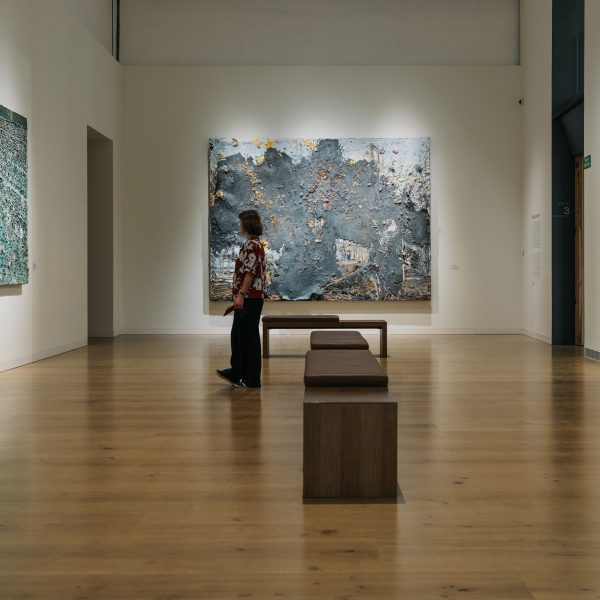
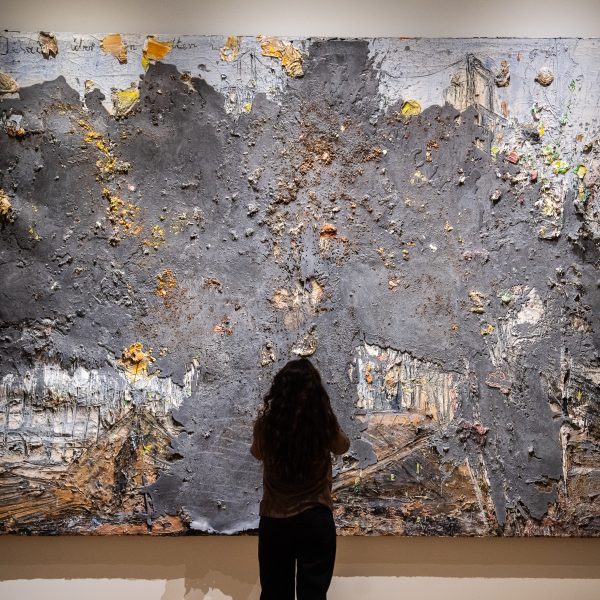
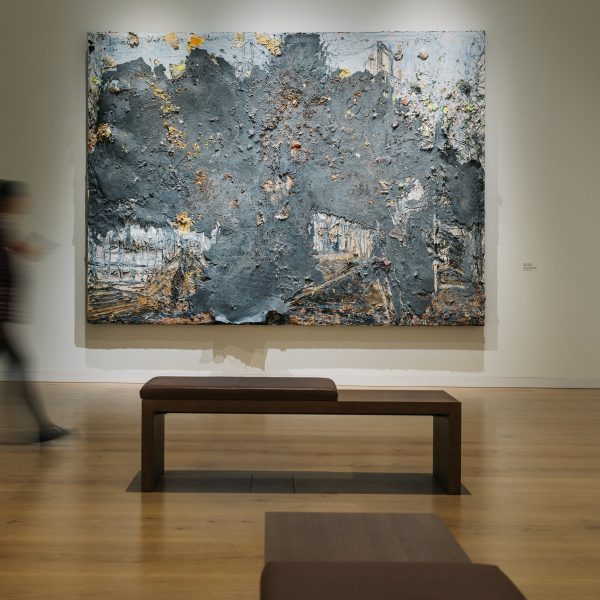
The relationship between Hortensia Herrero and Anselm Kiefer goes back almost a decade, when the collector acquired the work The Flowers of Evil, presented at the Royal Academy of Arts Summer Exhibition in 2016. This piece can currently be seen in the CAHH’s noble hall, together with two other works by the artist that form part of the permanent exhibition.
To prepare this show, Hortensia Herrero travelled to Kiefer’s studios in Barjac and Paris, taking an active part in selecting the works that will travel to Valencia. The result will be an exhibition curated by Javier Molins, artistic advisor to the CAHH, open until October 2026.
Landscape, history and myth: Kiefer’s universe at the CAHH
The exhibition will delve into one of the central themes of Anselm Kiefer’s work: landscape, understood as a physical, historical and symbolic space. Alongside it, history, mythology and literature form the conceptual core of a show in dialogue with the artist’s poetics. As Kiefer himself says: “I think in images. Poems help me. They are like buoys in the sea. I swim towards them, from one to the other; between them, without them, I would be lost.”
Highlights will include “Danaë”, one of the largest pieces the artist has ever made, more than thirteen metres wide. In it, Kiefer recreates the interior of Berlin’s Tempelhof airport and interweaves it with the Greek myth of Danaë and Zeus’s golden rain. This work, shown only once at an exhibition in New York in 2022, will be seen in Europe for the first time at the Hortensia Herrero Art Centre.

With this ambitious programme, the CAHH gradually bids farewell to the first presentation of its collection and looks ahead to 2026 with a proposal set to become an essential reference on the international art calendar. An event that no art lover should miss.
About Anselm Kiefer
Anselm Kiefer was born in 1945 in Donaueschingen, Germany. In 1992 he moved to France, where he lives and works between Paris and Barjac, near Avignon. The artist studied Law, Literature and Linguistics before entering the Academy of Fine Arts in Karlsruhe, and later Düsseldorf, where he was a student of Joseph Beuys. In 1980 he was selected to represent West Germany at the 39th Venice Biennale, and since then his work has been shown in major solo exhibitions at prestigious museums such as the Art Institute of Chicago (1987), the Nationalgalerie in Berlin (1991), the Metropolitan Museum of Art in New York (1998), the Fondation Beyeler in Basel (2001), the Guggenheim Museum Bilbao (2007), the Royal Academy of Arts in London (2014), the Centre Pompidou in Paris (2015), the Bibliothèque Nationale de France (2015), the Albertina in Vienna (2016), the State Hermitage Museum in Saint Petersburg (2017), the Musée Rodin in Paris (2017) and the Met Breuer in New York (2018), among many others.
Kiefer received Japan’s Praemium Imperiale in 1999, and in 2008 he was awarded the Peace Prize of the German Book Trade. In 2007 he became the first artist since Georges Braque to be commissioned for a permanent installation at the Louvre in Paris, and in 2018 his site-specific sculpture Uraeus was exhibited outside the Rockefeller Center in New York. In 2020, French President Emmanuel Macron commissioned Anselm Kiefer to create a permanent installation for the Panthéon in Paris.